





(本文转载自《孔子学院》中英文对照版2025年第4期/总第92期)

云冈石窟,坐落于山西省大同市城西约15公里处的武周山南麓,东西绵延1公里,现存大小洞窟254个,各类造像有59,000余尊。其建造工程自北魏文成帝和平初年(公元460年)启幕,直至正光五年(公元524年)竣工。根据造像风格和建造时间,云冈石窟可划分为早、中、晚三个时期:早期洞窟为北魏文成帝时期开凿的昙曜五窟,气势恢宏,开启了云冈石窟的辉煌篇章;中期洞窟在孝文帝与冯太后时期开凿,风格更加多元,民族交融特色愈发显著;晚期洞窟则是在孝文帝迁都洛阳之后由民间力量开凿而成,汉化之风尽显。从早期佛像所展现的西来像法风格到中期的民族交融,再到晚期的汉化之风,一幅鲜活生动的北魏历史画卷在眼前徐徐展开,诉说着时代的沧桑变迁与文化的融合新生。
Yungang Grottoes, located on the southern foot of Mount Wuzhou, about 15 kilometers west of Datong City in Shanxi Province, stretch approximately one kilometer from east to west. The site is comprised of 254 caves and over 59, 000 statues. Construction began in 460 AD ( the first year of the Heping period under Emperor Wencheng of the Northern Wei Dynasty ) and was completed in 524 AD ( the fifth year of the Zhengguang period under Emperor Xiaoming ) . Based on stylistic features and construction periods, the caves can be divided into three groups: early, middle, and late. The Early Grottoes include the Five Caves constructed under the supervision of Tan Yao, carved during Emperor Wencheng’s reign in Northern Wei. Majestic in scale, they mark the glorious beginning of the construction of the Yungang Grottoes. The Middle Grottoes, built during the reigns of Emperor Xiaowen and Empress Dowager Feng, exhibit greater stylistic diversity and stronger influences from ethnic groups. The Late Grottoes were constructed by private patrons after Emperor Xiaowen moved the capital to Luoyang, reflecting a fully developed Han Chinese style. From the early Western-influenced sculptures to the middle phase of ethnic integration and finally the Han cultural dominance of the late phase, the Yungang Grottoes unfold like a vivid historical scroll of the Northern Wei Dynasty. They stand as a testament to vast passage of time and the profound currents of cultural evolution and integration.

生动的北魏历史画卷
A Lively Portrait of Northern Wei History
◆早期昙曜五窟:西来像法
◆Early Grottoes: Buddhist Statues under Western Influences
位于云冈石窟西部窟区最东端的昙曜五窟,即第16—20窟,是北魏文成帝命凉州高僧昙曜主持开凿而成。这五座气势恢宏的大像窟,造像风格独具特色,既有犍陀罗1、秣菟罗2等西来特色,又彰显出鲜明的鲜卑风格。
Located at the eastern end of the western section of the Yungang Grottoes, the Five Caves, constructed under the supervision of Tan Yao ( Caves No. 16-20), were commissioned by Emperor Wencheng of the Northern Wei Dynasty and overseen by the eminent monk Tan Yao from Liangzhou. These five majestic caves exhibit a unique sculptural style, blending Gandharan1 and Mathuran2 influences from Western Regions with distinct elements of the Xianbei ethnicity.
-
犍陀罗:南亚古国名。
Gandhara: An ancient kingdom in South Asia.
-
秣菟罗:玄奘《大唐西域记》卷四中记载的印度古代国家。
Mathura: An ancient Indian kingdom recorded in Volume 4 of Xuanzang’s Great Tang Records on the Western Regions (Datang Xiyu Ji).
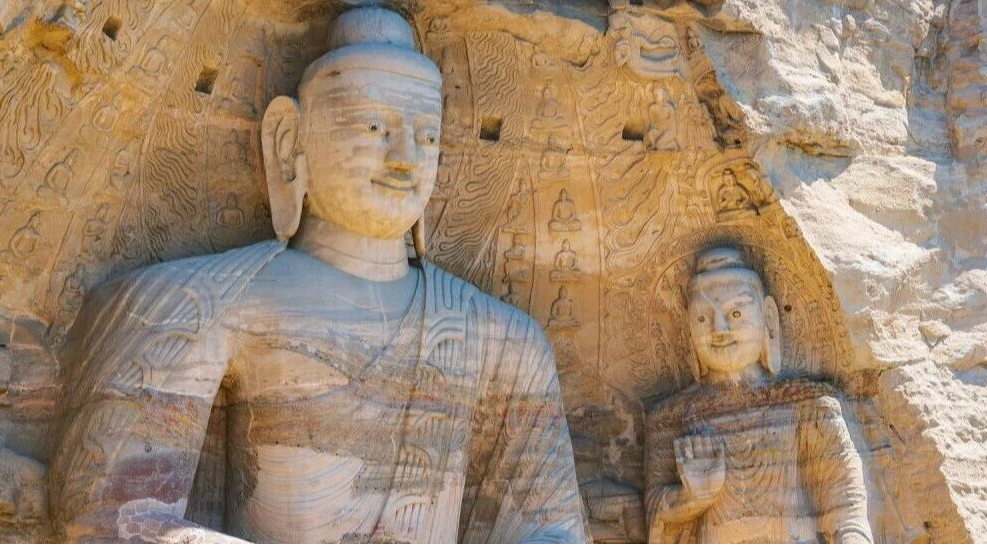
昙曜五窟的主尊大像,被普遍认为代表着北魏早期的五位皇帝。其中,第18—20窟的主尊大像身着袒右式佛衣,庄重威严;而两侧的立像则身披通肩式佛衣,尽显优雅之态。这两种佛衣样式都是犍陀罗与秣菟罗佛像艺术的典型特征,在昙曜五窟的造像中得以精彩呈现。
The colossal statues in these caves are widely believed to represent the five emperors of the early Northern Wei Dynasty. In caves No. 18-20, the main Buddha figures wear monastic robes with the right shoulder exposed, exuding solemn grandeur, while the standing attendant figures on both sides wear full–shoulder robes, radiating serene elegance. Both garment styles, expertly depicted in these caves, are defining characteristics of Gandharan and Mathuran Buddhist art.
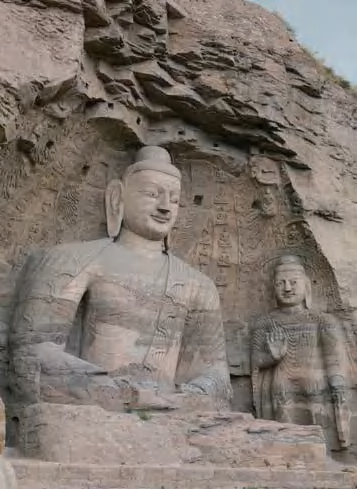
云冈石窟第20窟主尊大像及东立佛
Main Buddha Statue and Eastern Standing Buddha in Cave No. 20
步入第18窟,于主尊大像的两侧,能清晰看到佛祖十大弟子的庄严形象。仔细观察主尊大像的左臂,可见一位弟子正手握佛衣。在其手肘位置,有一尊仅雕刻了头部的造像,且头部微微转向佛祖,这正是佛祖大弟子迦叶。这位弟子高鼻深目,呈现出西方人的面部特征。第16窟主尊大像头顶的波浪纹样式肉髻,同样是犍陀罗风格的鲜明体现。值得一提的是,第18窟的主尊大像所着佛衣紧贴佛身,这种薄衣贴体的风格造型正是秣菟罗艺术风格的典型样式。
Upon entering Cave No. 18, on both sides of the main statue one can clearly see the solemn figures of Buddha’s ten great disciples. On closer observation of the left side, there is a disciple holding the Buddist robe. Near its elbow, a carving depicting only a head, slightly turned toward the Buddha. This figure represents the Buddha’s foremost disciple, Kāśyapa. This figure has a high nose and deep-set eyes, exhibiting distinct Western facial features. Similarly, the wavy uṣṇīṣa atop the head of the main statue in Cave No. 16 is a clear manifestation of the Gandharan style. Notably, the robe worn by the main statue in Cave No. 18 clings closely to the body—a thin, silhouette-revealing style that is characteristic of the Mathuran style of art.
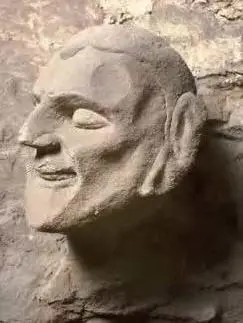
第18窟主尊大像左侧弟子头像
Head of a Disciple on the Left Side of the Main Statue in Cave No. 18
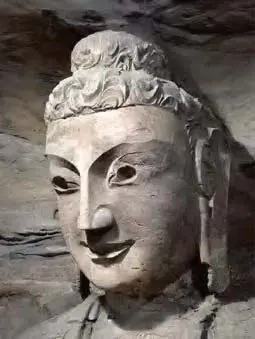
第16窟主尊大像头部波浪纹样式肉髻
Wavy uṣṇīṣa atop the Head of the Main Statue in Cave No. 16
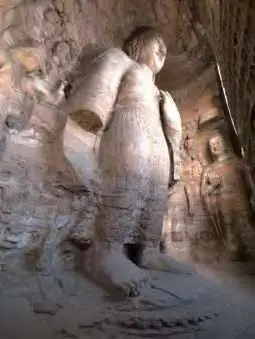
第18窟主尊大像及东立佛
Main Statue and Eastern Standing Buddha in Cave No. 18
◆中期洞窟:民族交融
◆Middle Grottoes: Ethnic Integration
位于云冈石窟东部窟区的第1、2窟,第3窟,以及中部窟区的第5、6窟,第7、8窟,第9、10窟,第11、12、13窟,均属云冈石窟的中期洞窟,开凿于文成帝之后、孝文帝迁都洛阳之前的孝文帝与冯太后时期。
The caves located in the eastern section of the Yungang Grottoes—caves No. 1-2, and No. 3—as well as those in the central section—caves No. 5-6, 7-8, 9-10, and 11, 12, 13—all belong to the Middle Grottoes, excavated during the reign of Emperor Xiaowen and Empress Dowager Feng, after Emperor Wencheng and before Emperor Xiaowen moved the capital to Luoyang.
中期洞窟的形制丰富多样,涵盖云冈石窟的三种主要洞窟形制,即大像窟、佛殿窟和中心塔柱窟。此外,“双窟”这一独特形制的出现尤为引人注目。在佛像雕刻方面,中期洞窟在延续早期西来特色的同时,又巧妙融入少数民族的独特韵味,展现出别具一格的艺术魅力。
The Middle Grottoes display a rich diversity of architectural forms, encompassing the three main types found in the Yungang Grottoes: giant statue caves, Buddha hall caves, and central pillar caves. Additionally, the“twin caves”—adjacent cave temples with nearly identical forms, closely connected in layout and sculptural content—are particularly noteworthy. While retaining the Western Regions’influences of the early period, the sculptures skillfully incorporate distinctive ethnic elements, showcasing unique artistic charm.
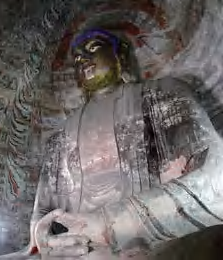
第5窟大像窟
Giant Statue Cave (Cave No. 5)
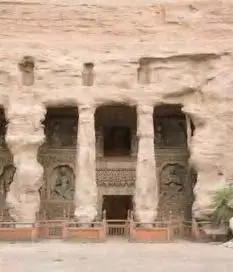
第9窟佛殿窟
Buddha Hall Cave (Cave No. 9)
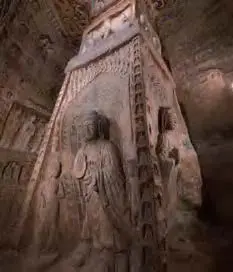
第11窟中心塔柱窟
Central Pillar Cave (Cave No. 11)
在中期洞窟中,西来像法仍然沿用。诸如第7、8窟中,主尊大像依然身着与早期洞窟造像同款的袒右式佛衣,同时也可见希腊罗马式的科林斯式柱头。第9、10窟前室,希腊、罗马样式的爱奥尼克、科林斯柱头依然可见。前室窟顶甚至能看到西方天使样式的夜叉形象。第9窟前室窟门两侧的金刚力士手持两叉戟,这种样式曾在波斯萨珊王朝的金币上出现。第8窟窟门两侧的护法天神以及第6窟中心塔柱西壁那位有着山羊胡须的金刚力士,也都带有中亚、西域造像风格。
Western influences can still be observed in the statues from this period. For instance, in caves No. 7-8, the main statues still wear robes in the earlier style, leaving the right shoulder exposed. Corinthian capitals in the Greco–Roman style are also present. In the front chambers of caves No. 9-10, both Ionian and Corinthian capitals of Greek and Roman design are visible. One can even spot yaksha figures on the ceiling of the front chamber that resemble Western–style angels. The Vajra warriors flanking the entrance to Cave No. 9 hold tridents, a design previously seen on coins from the Persian Sasanian Empire. The guardian deities on both sides of the entrance to Cave No. 8, as well as the Vajra warrior with a goat–like mustache on the western wall of the central pillar in Cave No. 6, exhibit clear Central and Western Asian sculptural elements.
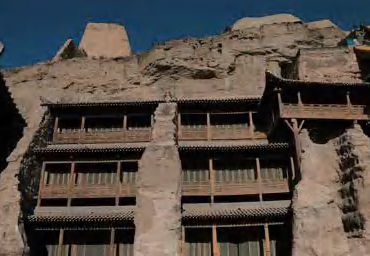
第7、8双窟外景
Exterior View of Twin Caves
(Caves No. 7—8)
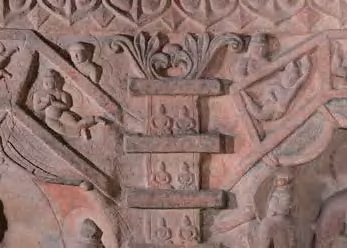
第8窟后室东壁中层龛中间科林斯柱头
Corinthian Capital in the Middle of the Middle-Tier Niche, Eastern Wall, Rear Chamber, Cave No. 8
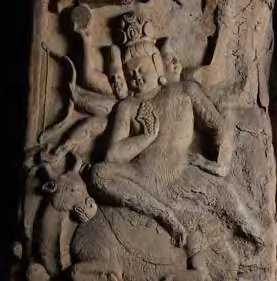
第8窟窟门两侧摩醯(xī)首罗天与鸠摩罗天
Maheshvara and Kumara Guardians on Two Sides of the Entrance to Cave No.8
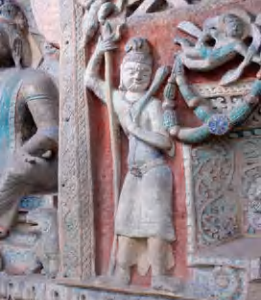
第9窟前室北壁西侧佛龛左侧艾奥尼亚柱头及手持两叉戟金刚力士
Ionian Capital and Vajra Warrior Holding Two Tridents on the Left Side of the Western Niche, Northern Wall, Front Chamber, Cave No. 9
民族交融在这一时期也变得愈发繁盛。在第5、6窟中,佛像所着服饰发生了重大变革——由早期的西来佛衣转变为衣袖宽大的褒衣博带式佛衣。这种服饰的变化,是北魏时期孝文帝推行汉化改革的重要体现,也是鲜卑族与汉族交往交流的生动彰显。
Ethnic integration became increasingly prominent during this period. In caves No. 5 and No. 6, the attire of the Buddha statues underwent a significant transformation: from the earlier Western–style robes to one that features broad sleeves, low–hanging collars and wide sashes tied at the chest ( known as the baoyi-bodai style). This shift reflects Emperor Xiaowen’s efforts to promote sinicization reforms and vividly illustrates the cultural interaction and exchange between the Xianbei and Han peoples.
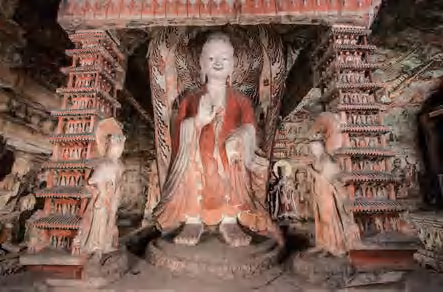
第6窟塔柱北壁上层着褒衣博带式佛衣立佛
Standing Buddha Wearing the Baoyi-Bodai Style Robe, Upper Section of Northern Wall of the Central Pillar, Cave No. 6
◆晚期洞窟:汉化之风
◆Late Grottoes: Prominent Han Style
云冈石窟的晚期洞窟包括云冈东部窟区的第4窟,西部窟区的第14、15窟,以及第21—45窟,此外还涵盖主要洞窟周边的附属洞窟。这些洞窟大多是在北魏迁都洛阳之后,由平城地区的民间力量开凿而成。在孝文帝推行汉化改革之后,这一时期的佛像均身着褒衣博带式佛衣,呈现“秀骨清像”风格,完全展现出汉化之后的鲜明特点。
The Late Grottoes include Cave No. 4 in the eastern section, caves No. 14, No. 15, and No. 21–45 in the western section, as well as subsidiary caves surrounding the main caves. Most of these caves were excavated by local patrons in the Pingcheng area after the Northern Wei capital was relocated to Luoyang. Following Emperor Xiaowen’s sinicization reforms, the Buddhist statues of this period all wear the baoyi-bodai style robes, featuring xiugu-qingxiang ( slender figures with refined elegance ) , fully embodying the distinct characteristics of Han influence.
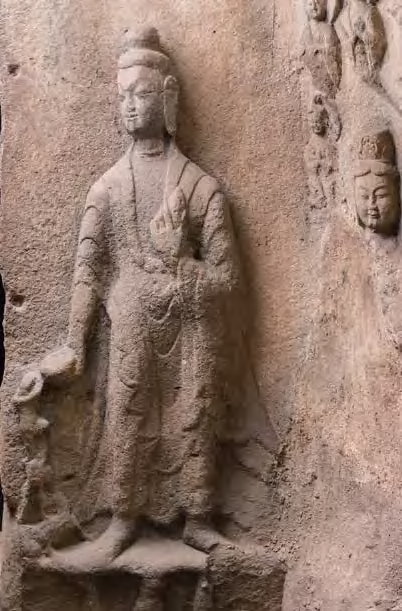
第25窟南壁西侧立佛
Standing Buddha on the Western Side of the Southern Wall, Cave No. 25
石窟文化的幕后故事
Stories Behind the Caves
在云冈石窟的开凿过程中,有两个关键人物不得不提。
Two key figures played pivotal roles in the excavation of the Yungang Grottoes.
◆昙曜
◆Tan Yao the Monk
魏晋南北朝时期,河西走廊佛教发展兴盛,众多西域僧人、工匠等生活于此,或经此地前往中原地区。凉州(今甘肃武威)作为河西四郡之一,汇聚了大量西域僧人和工匠。北凉时期,当地还修建了天梯山石窟。
During the Wei, Jin, and Northern-Southern dynasties ( 220—589 AD ) , Buddhism flourished in the Hexi Corridor. A large number of monks and artisans from the Western Regions either settled in the area or passed through it on their way to the Central Plains. Liangzhou ( present-day Wuwei in Gansu), one of the four prefectures of the Hexi Corridor, became a hub for them. It was also here that the Tiantishan Grottoes were constructed during the Northern Liang period.
公元439年,北魏太武帝拓跋焘攻灭北凉,占领其都城凉州,包括昙曜在内的大量僧人和工匠被带至北魏都城平城。
In 439 AD, Northern Wei Emperor Taiwu ( Tuoba Tao ) conquered Northern Liang, capturing its capital Liangzhou and relocating local monks and artisans—including Tan Yao—to the Northern Wei capital, Pingcheng.
公元460年,昙曜主持开凿云冈石窟,所用工匠大多来自凉州。据《魏书》记载,公元455年,有西域僧人携带佛像绘本来到平城。这些来自西域的佛像绘本以及僧人和工匠,为早期洞窟佛像呈现西来像法奠定了基础。
In 460 AD, Tan Yao directed the excavation of Yungang Grottoes, employing primarily Liangzhou artisans. The Book of Wei records that in 455 AD, a monk from the Western Regions arrived in Pingcheng with Buddhist iconographic manuscripts. These texts, along with monks and artisans from the Western Regions, were essential for the Western artistic influences visible in the Early Grottoes.
◆孝文帝
◆Emperor Xiaowen
文成帝去世后,冯太后听政掌权,孝文帝改革得以顺利开展。太和十年(468年)以后,孝文帝推行服制改革,为推动“穿汉服”政策的落实,云冈佛像也身着汉服样式,故而第5、6窟中所见到的佛衣多为褒衣博带式。此外,在开凿中期洞窟时,北魏皇室征用来自徐州的工匠,使得中期洞窟的佛像呈现出民族交融的特点。
Following the death of Emperor Wencheng, Empress Dowager Feng assumed the regency, facilitating the smooth implementation of Emperor Xiaowen’s reform policies. In 468 AD ( the tenth year of the Taihe period ) , Emperor Xiaowen introduced clothing reforms mandating Han-style attire. In alignment with this policy, the Buddha statues in Yungang Grottoes adopted Han-style robes, most notably the baoyi-bodai style prominently featured in caves No. 5 and No. 6. Furthermore, during the excavation of the Middle Grottoes, the Northern Wei court recruited artisans from Xuzhou in eastern China, leading to Buddha statues that exhibit clear characteristics of this ethnic and cultural integration.
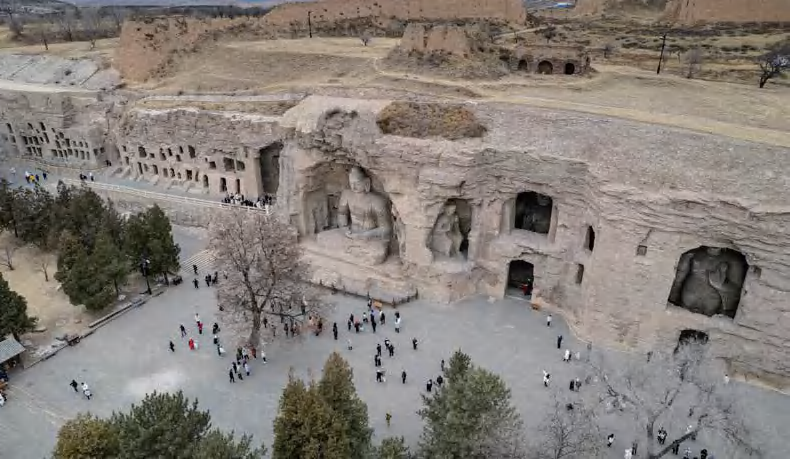
云冈石窟的保护之路
Conservation of the Yungang Grottoes
自北魏完成云冈石窟的开凿后,保护工作便已启动。北魏之后的历朝历代,大多采用包泥彩绘的方式对佛像加以保护。金初,驻守西京(今大同)的完颜宗翰察觉武周川(俗名“十里河”)距石窟较近,担心会对石窟造成侵蚀,便对其进行了改道。
The conservation of the Yungang Grottoes began immediately after their completion during the Northern Wei Dynasty. Subsequent dynasties primarily employed painted clay modeling with layered applique to preserve the Buddha statues. In the early Jin period, Wanyan Zonghan, the military governor stationed at Xijing ( present-day Datong ) , observed that the Wuzhou River’s proximity to the grottoes posed an erosion risk and consequently diverted its course.
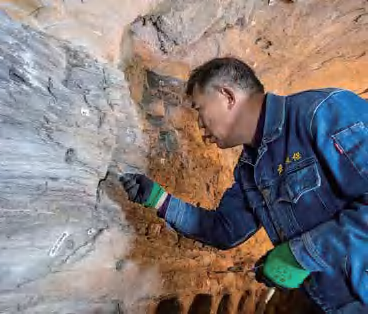
民国时期,晋军将领赵承绶驻守云冈,他每日清晨带领士兵巡逻,驱赶盗贼,修复佛像,清理杂物,整理文物碎片。他的坚守让云冈石窟在战火纷飞的年代得以保存完好。中华人民共和国成立后,云冈石窟的保护走向正轨。特别是1973年,周恩来总理陪同法国总统蓬皮杜参观后,云冈石窟备受关注,相关部门随即启动“三年保护工程”,抢险加固、修复濒临坍塌的洞窟,并开展考古工作。随后的“八五保护维修工程”更让云冈石窟的保护工作实现质的飞跃:采用更科学、先进的技术,通过降低地面、疏导排水等手段精准解决水蚀难题;修建保护性围墙,既保障监测设备,又守护游客安全;搭建木结构窟檐,有效抵御煤尘和酸雨侵蚀;综合运用多种加固方法,系统排除坍塌险情。人们对云冈石窟的保护,从最初的抢救性保护逐步转向更科学、系统的日常性保护,让云冈石窟在岁月长河中得以长久留存。
During the period of the Republic of China, Zhao Chengshou, a Jin army general stationed in Yungang, led his troops in daily dawn patrols to drive away looters, repair statues, clear debris, and organize scattered fragments of relics. His dedication ensured the preservation of the Yungang Grottoes even through the years of warfare. After the founding of the People’s Republic of China, the protection of the Yungang Grottoes became increasingly systematic. In 1973, following the visit of French President Georges Pompidou to Yungang accompanied by Premier Zhou Enlai, the site drew significant attention. Authorities soon launched the Three-Year Protection Project, focusing on emergency reinforcements, restoration of nearly collapsed caves, and archaeological work. The subsequent 1991–1995 Protection and Restoration Project marked a significant advancement in conservation efforts. It introduced more scientific approaches, including: a ) lowering the surrounding ground level and improving drainage systems to reduce water damage; b ) installing protective walls to enhance equipment monitoring and ensure visitor safety; c ) constructing wooden cave eaves to shield against coal dust and acid rain; d ) employing multiple reinforcement techniques to mitigate the risk of collapse. With these efforts, the conservation of the Yungang Grottoes has evolved from ad-hoc emergency efforts to a more scientific, systematic, and sustainable approach, laying a solid foundation for their enduring legacy.
更多精彩内容,欢迎访问《孔子学院》官网获取。
文:张轩鑫 Zhang Xuanxin
译:汤敏 Tang Min
图:云冈研究院
美术编辑:姚媛媛 何纯洁(实习)